
What we do
OTLET is an independent nonprofit based in Brussels. It works to strengthen the ethical culture of the people who design and deploy digital technology — professionals, developers, researchers, and students — through accountability, education, and public debate. It builds on years of advocacy against the misuse of DNA data for surveillance, which led to the retraction of some fifty scientific articles.
Owning the limits means naming them openly, designing within them, and answering for the consequences when they are crossed. It is neither a rejection of technology nor a celebration of it. It is the discipline of saying what a system is for, and what it is not for.
Other sciences learned this the hard way. Chemistry had chemical warfare, physics the atomic bomb, medicine its abuses of human subjects. These reckonings changed the culture of the field. Computing and AI are only beginning to get through their own. We would rather the culture change before the catastrophe.
Why culture
Laws and frameworks such as the GDPR and the EU AI Act matter. But rules only work when the people they apply to believe in them. Without that, they become paperwork to get around. OTLET works on the layer beneath the rules: the stories, norms, and habits of the tech community.
Why Europe
Europe has set the global pace on data protection and AI regulation, and Brussels is where much of that work happens. OTLET is based here to connect the people building technology with the institutions, universities, and civil society shaping how it is governed.
How we use AI
OTLET is designed to run with substantial help from AI tools — for research, drafting, and organization. We hold ourselves to the standards we promote: we say where AI was involved, we protect personal data under the GDPR, and every decision and every public statement is made and owned by a person.
Independence
OTLET does not accept funding from organizations that are, or are likely to become, the subject of its advocacy. We will publish the list of our funders.
Our name
OTLET honors Paul Otlet, who with Henri La Fontaine set out in 1895 to catalog the world’s published knowledge, and Léonie La Fontaine, who documented the condition of women within the same network. Their ambition, and the limits it met, frame our work.
Our logo
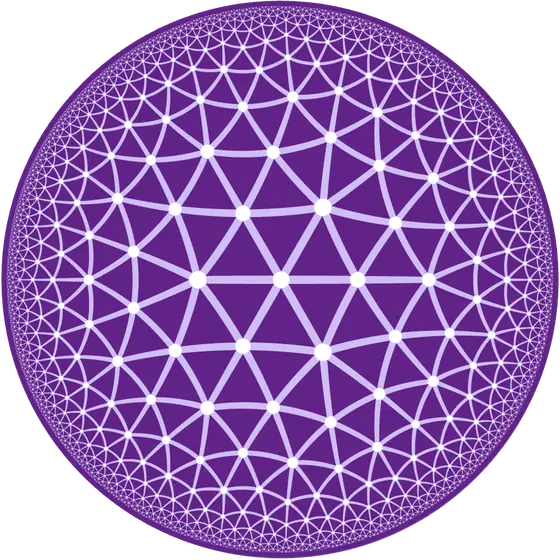 Otlet and La Fontaine aimed at organizing and connecting all the information in the
world. They also promoted global cooperation by connecting scientific, social, and humanitarian associations into a
unified network, to build a “world polity” that operated alongside—and
influenced—formal governments.
Our emblem is a hyperbolic tiling drawn in the Poincaré disk, a model of the hyperbolic plane in which an infinite pattern fits inside a circle and its cells shrink toward the rim. The emblem illustrates how Otlet and La Fontaine connected knowledge and people across the world.